|
Z3
|


|
All Data Structures Namespaces Files Functions Variables Typedefs Enumerations Enumerator Properties Friends Defines
|
Z3
|
|
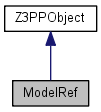
 Inheritance diagram for ModelRef:
Public Member Functions | |
| def | __init__ |
| def | __del__ |
| def | __repr__ |
| def | sexpr |
| def | eval |
| def | evaluate |
| def | __len__ |
| def | get_interp |
| def | num_sorts |
| def | get_sort |
| def | sorts |
| def | get_universe |
| def | __getitem__ |
| def | decls |
Data Fields | |
| model | |
| ctx | |
Model/Solution of a satisfiability problem (aka system of constraints).
| def __init__ | ( | self, | |
| m, | |||
| ctx | |||
| ) |
| def __del__ | ( | self | ) |
| def __getitem__ | ( | self, | |
| idx | |||
| ) |
If `idx` is an integer, then the declaration at position `idx` in the model `self` is returned. If `idx` is a declaration, then the actual interpreation is returned.

The elements can be retrieved using position or the actual declaration.

>>> f = Function('f', IntSort(), IntSort())
>>> x = Int('x')
>>> s = Solver()
>>> s.add(x > 0, x < 2, f(x) == 0)
>>> s.check()
sat
>>> m = s.model()
>>> len(m)
2
>>> m[0]
x
>>> m[1]
f
>>> m[x]
1
>>> m[f]
[1 -> 0, else -> 0]
>>> for d in m: print("%s -> %s" % (d, m[d]))
x -> 1
f -> [1 -> 0, else -> 0]
Definition at line 5526 of file z3py.py.
05526
05527     def __getitem__(self, idx):
05528         """If `idx` is an integer, then the declaration at position `idx` in the model `self` is returned. If `idx` is a declaration, then the actual interpreation is returned.
05529
05530         The elements can be retrieved using position or the actual declaration.
05531
05532         >>> f = Function('f', IntSort(), IntSort())
05533         >>> x = Int('x')
05534         >>> s = Solver()
05535         >>> s.add(x > 0, x < 2, f(x) == 0)
05536         >>> s.check()
05537         sat
05538         >>> m = s.model()
05539         >>> len(m)
05540         2
05541         >>> m[0]
05542         x
05543         >>> m[1]
05544         f
05545         >>> m[x]
05546         1
05547         >>> m[f]
05548         [1 -> 0, else -> 0]
05549         >>> for d in m: print("%s -> %s" % (d, m[d]))
05550         x -> 1
05551         f -> [1 -> 0, else -> 0]
05552         """
05553         if isinstance(idx, int):
05554             if idx >= len(self):
05555                 raise IndexError
05556             num_consts = Z3_model_get_num_consts(self.ctx.ref(), self.model)
05557             if (idx < num_consts):
05558                 return FuncDeclRef(Z3_model_get_const_decl(self.ctx.ref(), self.model, idx), self.ctx)
05559             else:
05560                 return FuncDeclRef(Z3_model_get_func_decl(self.ctx.ref(), self.model, idx - num_consts), self.ctx)
05561         if isinstance(idx, FuncDeclRef):
05562             return self.get_interp(idx)
05563         if is_const(idx):
05564             return self.get_interp(idx.decl())
05565         if isinstance(idx, SortRef):
05566             return self.get_universe(idx)
05567         if __debug__:
05568             _z3_assert(False, "Integer, Z3 declaration, or Z3 constant expected")
05569         return None
| def __len__ | ( | self | ) |
Return the number of constant and function declarations in the model `self`.

>>> f = Function('f', IntSort(), IntSort())
>>> x = Int('x')
>>> s = Solver()
>>> s.add(x > 0, f(x) != x)
>>> s.check()
sat
>>> m = s.model()
>>> len(m)
2
Definition at line 5405 of file z3py.py.
05405
05406     def __len__(self):
05407         """Return the number of constant and function declarations in the model `self`.
05408
05409         >>> f = Function('f', IntSort(), IntSort())
05410         >>> x = Int('x')
05411         >>> s = Solver()
05412         >>> s.add(x > 0, f(x) != x)
05413         >>> s.check()
05414         sat
05415         >>> m = s.model()
05416         >>> len(m)
05417         2
05418         """
05419         return int(Z3_model_get_num_consts(self.ctx.ref(), self.model)) + int(Z3_model_get_num_funcs(self.ctx.ref(), self.model))
| def __repr__ | ( | self | ) |
| def decls | ( | self | ) |
Return a list with all symbols that have an interpreation in the model `self`.
>>> f = Function('f', IntSort(), IntSort())
>>> x = Int('x')
>>> s = Solver()
>>> s.add(x > 0, x < 2, f(x) == 0)
>>> s.check()
sat
>>> m = s.model()
>>> m.decls()
[x, f]
Definition at line 5570 of file z3py.py.
05570
05571     def decls(self):
05572         """Return a list with all symbols that have an interpreation in the model `self`.
05573         >>> f = Function('f', IntSort(), IntSort())
05574         >>> x = Int('x')
05575         >>> s = Solver()
05576         >>> s.add(x > 0, x < 2, f(x) == 0)
05577         >>> s.check()
05578         sat
05579         >>> m = s.model()
05580         >>> m.decls()
05581         [x, f]
05582         """
05583         r = []
05584         for i in range(Z3_model_get_num_consts(self.ctx.ref(), self.model)):
05585             r.append(FuncDeclRef(Z3_model_get_const_decl(self.ctx.ref(), self.model, i), self.ctx))
05586         for i in range(Z3_model_get_num_funcs(self.ctx.ref(), self.model)):
05587             r.append(FuncDeclRef(Z3_model_get_func_decl(self.ctx.ref(), self.model, i), self.ctx))
05588         return r
| def eval | ( | self, | |
| t, | |||
model_completion = False |
|||
| ) |
Evaluate the expression `t` in the model `self`. If `model_completion` is enabled, then a default interpretation is automatically added for symbols that do not have an interpretation in the model `self`.

>>> x = Int('x')
>>> s = Solver()
>>> s.add(x > 0, x < 2)
>>> s.check()
sat
>>> m = s.model()
>>> m.eval(x + 1)
2
>>> m.eval(x == 1)
True
>>> y = Int('y')
>>> m.eval(y + x)
1 + y
>>> m.eval(y)
y
>>> m.eval(y, model_completion=True)
0
>>> # Now, m contains an interpretation for y
>>> m.eval(y + x)
1
Definition at line 5350 of file z3py.py.
05350
05351     def eval(self, t, model_completion=False):
05352         """Evaluate the expression `t` in the model `self`. If `model_completion` is enabled, then a default interpretation is automatically added for symbols that do not have an interpretation in the model `self`.
05353
05354         >>> x = Int('x')
05355         >>> s = Solver()
05356         >>> s.add(x > 0, x < 2)
05357         >>> s.check()
05358         sat
05359         >>> m = s.model()
05360         >>> m.eval(x + 1)
05361         2
05362         >>> m.eval(x == 1)
05363         True
05364         >>> y = Int('y')
05365         >>> m.eval(y + x)
05366         1 + y
05367         >>> m.eval(y)
05368         y
05369         >>> m.eval(y, model_completion=True)
05370         0
05371         >>> # Now, m contains an interpretation for y
05372         >>> m.eval(y + x)
05373         1
05374         """
05375         r = (Ast * 1)()
05376         if Z3_model_eval(self.ctx.ref(), self.model, t.as_ast(), model_completion, r):
05377             return _to_expr_ref(r[0], self.ctx)
05378         raise Z3Exception("failed to evaluate expression in the model")
| def evaluate | ( | self, | |
| t, | |||
model_completion = False |
|||
| ) |
Alias for `eval`.

>>> x = Int('x')
>>> s = Solver()
>>> s.add(x > 0, x < 2)
>>> s.check()
sat
>>> m = s.model()
>>> m.evaluate(x + 1)
2
>>> m.evaluate(x == 1)
True
>>> y = Int('y')
>>> m.evaluate(y + x)
1 + y
>>> m.evaluate(y)
y
>>> m.evaluate(y, model_completion=True)
0
>>> # Now, m contains an interpretation for y
>>> m.evaluate(y + x)
1
Definition at line 5379 of file z3py.py.
05379
05380     def evaluate(self, t, model_completion=False):
05381         """Alias for `eval`.
05382
05383         >>> x = Int('x')
05384         >>> s = Solver()
05385         >>> s.add(x > 0, x < 2)
05386         >>> s.check()
05387         sat
05388         >>> m = s.model()
05389         >>> m.evaluate(x + 1)
05390         2
05391         >>> m.evaluate(x == 1)
05392         True
05393         >>> y = Int('y')
05394         >>> m.evaluate(y + x)
05395         1 + y
05396         >>> m.evaluate(y)
05397         y
05398         >>> m.evaluate(y, model_completion=True)
05399         0
05400         >>> # Now, m contains an interpretation for y
05401         >>> m.evaluate(y + x)
05402         1
05403         """
05404         return self.eval(t, model_completion)
| def get_interp | ( | self, | |
| decl | |||
| ) |
Return the interpretation for a given declaration or constant.

>>> f = Function('f', IntSort(), IntSort())
>>> x = Int('x')
>>> s = Solver()
>>> s.add(x > 0, x < 2, f(x) == 0)
>>> s.check()
sat
>>> m = s.model()
>>> m[x]
1
>>> m[f]
[1 -> 0, else -> 0]
Definition at line 5420 of file z3py.py.
Referenced by ModelRef.__getitem__().
05420
05421     def get_interp(self, decl):
05422         """Return the interpretation for a given declaration or constant.
05423
05424         >>> f = Function('f', IntSort(), IntSort())
05425         >>> x = Int('x')
05426         >>> s = Solver()
05427         >>> s.add(x > 0, x < 2, f(x) == 0)
05428         >>> s.check()
05429         sat
05430         >>> m = s.model()
05431         >>> m[x]
05432         1
05433         >>> m[f]
05434         [1 -> 0, else -> 0]
05435         """
05436         if __debug__:
05437             _z3_assert(isinstance(decl, FuncDeclRef) or is_const(decl), "Z3 declaration expected")
05438         if is_const(decl):
05439             decl = decl.decl()
05440         try:
05441             if decl.arity() == 0:
05442                 r = _to_expr_ref(Z3_model_get_const_interp(self.ctx.ref(), self.model, decl.ast), self.ctx)
05443                 if is_as_array(r):
05444                     return self.get_interp(get_as_array_func(r))
05445                 else:
05446                     return r
05447             else:
05448                 return FuncInterp(Z3_model_get_func_interp(self.ctx.ref(), self.model, decl.ast), self.ctx)
05449         except Z3Exception:
05450             return None
| def get_sort | ( | self, | |
| idx | |||
| ) |
Return the unintepreted sort at position `idx` < self.num_sorts().

>>> A = DeclareSort('A')
>>> B = DeclareSort('B')
>>> a1, a2 = Consts('a1 a2', A)
>>> b1, b2 = Consts('b1 b2', B)
>>> s = Solver()
>>> s.add(a1 != a2, b1 != b2)
>>> s.check()
sat
>>> m = s.model()
>>> m.num_sorts()
2
>>> m.get_sort(0)
A
>>> m.get_sort(1)
B
Definition at line 5466 of file z3py.py.
05466
05467     def get_sort(self, idx):
05468         """Return the unintepreted sort at position `idx` < self.num_sorts().
05469
05470         >>> A = DeclareSort('A')
05471         >>> B = DeclareSort('B')
05472         >>> a1, a2 = Consts('a1 a2', A)
05473         >>> b1, b2 = Consts('b1 b2', B)
05474         >>> s = Solver()
05475         >>> s.add(a1 != a2, b1 != b2)
05476         >>> s.check()
05477         sat
05478         >>> m = s.model()
05479         >>> m.num_sorts()
05480         2
05481         >>> m.get_sort(0)
05482         A
05483         >>> m.get_sort(1)
05484         B
05485         """
05486         if idx >= self.num_sorts():
05487             raise IndexError
05488         return _to_sort_ref(Z3_model_get_sort(self.ctx.ref(), self.model, idx), self.ctx)
| def get_universe | ( | self, | |
| s | |||
| ) |
Return the intepretation for the uninterpreted sort `s` in the model `self`.

>>> A = DeclareSort('A')
>>> a, b = Consts('a b', A)
>>> s = Solver()
>>> s.add(a != b)
>>> s.check()
sat
>>> m = s.model()
>>> m.get_universe(A)
[A!val!0, A!val!1]
Definition at line 5506 of file z3py.py.
Referenced by ModelRef.__getitem__().
05506
05507     def get_universe(self, s):
05508         """Return the intepretation for the uninterpreted sort `s` in the model `self`.
05509
05510         >>> A = DeclareSort('A')
05511         >>> a, b = Consts('a b', A)
05512         >>> s = Solver()
05513         >>> s.add(a != b)
05514         >>> s.check()
05515         sat
05516         >>> m = s.model()
05517         >>> m.get_universe(A)
05518         [A!val!0, A!val!1]
05519         """
05520         if __debug__:
05521             _z3_assert(isinstance(s, SortRef), "Z3 sort expected")
05522         try:
05523             return AstVector(Z3_model_get_sort_universe(self.ctx.ref(), self.model, s.ast), self.ctx)
05524         except Z3Exception:
05525             return None
| def num_sorts | ( | self | ) |
Return the number of unintepreted sorts that contain an interpretation in the model `self`.

>>> A = DeclareSort('A')
>>> a, b = Consts('a b', A)
>>> s = Solver()
>>> s.add(a != b)
>>> s.check()
sat
>>> m = s.model()
>>> m.num_sorts()
1
Definition at line 5451 of file z3py.py.
Referenced by ModelRef.get_sort().
05451
05452     def num_sorts(self):
05453         """Return the number of unintepreted sorts that contain an interpretation in the model `self`.
05454
05455         >>> A = DeclareSort('A')
05456         >>> a, b = Consts('a b', A)
05457         >>> s = Solver()
05458         >>> s.add(a != b)
05459         >>> s.check()
05460         sat
05461         >>> m = s.model()
05462         >>> m.num_sorts()
05463         1
05464         """
05465         return int(Z3_model_get_num_sorts(self.ctx.ref(), self.model))
| def sexpr | ( | self | ) |
Return a textual representation of the s-expression representing the model.
Definition at line 5346 of file z3py.py.
Referenced by Fixedpoint.__repr__(), and Optimize.__repr__().
05346
05347     def sexpr(self):
05348         """Return a textual representation of the s-expression representing the model."""
05349         return Z3_model_to_string(self.ctx.ref(), self.model)
| def sorts | ( | self | ) |
Return all uninterpreted sorts that have an interpretation in the model `self`.

>>> A = DeclareSort('A')
>>> B = DeclareSort('B')
>>> a1, a2 = Consts('a1 a2', A)
>>> b1, b2 = Consts('b1 b2', B)
>>> s = Solver()
>>> s.add(a1 != a2, b1 != b2)
>>> s.check()
sat
>>> m = s.model()
>>> m.sorts()
[A, B]
Definition at line 5489 of file z3py.py.
05489
05490     def sorts(self):
05491         """Return all uninterpreted sorts that have an interpretation in the model `self`.
05492
05493         >>> A = DeclareSort('A')
05494         >>> B = DeclareSort('B')
05495         >>> a1, a2 = Consts('a1 a2', A)
05496         >>> b1, b2 = Consts('b1 b2', B)
05497         >>> s = Solver()
05498         >>> s.add(a1 != a2, b1 != b2)
05499         >>> s.check()
05500         sat
05501         >>> m = s.model()
05502         >>> m.sorts()
05503         [A, B]
05504         """
05505         return [ self.get_sort(i) for i in range(self.num_sorts()) ]
Definition at line 5334 of file z3py.py.
Referenced by ArithRef.__add__(), BitVecRef.__add__(), BitVecRef.__and__(), FuncDeclRef.__call__(), ArithRef.__div__(), BitVecRef.__div__(), ExprRef.__eq__(), Probe.__eq__(), ArithRef.__ge__(), BitVecRef.__ge__(), Probe.__ge__(), ArrayRef.__getitem__(), ModelRef.__getitem__(), ApplyResult.__getitem__(), ArithRef.__gt__(), BitVecRef.__gt__(), Probe.__gt__(), BitVecRef.__invert__(), ArithRef.__le__(), BitVecRef.__le__(), Probe.__le__(), BitVecRef.__lshift__(), ArithRef.__lt__(), BitVecRef.__lt__(), Probe.__lt__(), ArithRef.__mod__(), BitVecRef.__mod__(), ArithRef.__mul__(), BitVecRef.__mul__(), ExprRef.__ne__(), Probe.__ne__(), ArithRef.__neg__(), BitVecRef.__neg__(), BitVecRef.__or__(), ArithRef.__pow__(), ArithRef.__radd__(), BitVecRef.__radd__(), BitVecRef.__rand__(), ArithRef.__rdiv__(), BitVecRef.__rdiv__(), BitVecRef.__rlshift__(), ArithRef.__rmod__(), BitVecRef.__rmod__(), ArithRef.__rmul__(), BitVecRef.__rmul__(), BitVecRef.__ror__(), ArithRef.__rpow__(), BitVecRef.__rrshift__(), BitVecRef.__rshift__(), ArithRef.__rsub__(), BitVecRef.__rsub__(), BitVecRef.__rxor__(), ArithRef.__sub__(), BitVecRef.__sub__(), BitVecRef.__xor__(), DatatypeSortRef.accessor(), Fixedpoint.add_rule(), Optimize.add_soft(), Tactic.apply(), AlgebraicNumRef.approx(), ExprRef.arg(), ApplyResult.as_expr(), Fixedpoint.assert_exprs(), QuantifierRef.body(), BoolSortRef.cast(), DatatypeSortRef.constructor(), ApplyResult.convert_model(), ExprRef.decl(), ModelRef.decls(), RatNumRef.denominator(), FuncDeclRef.domain(), ArraySortRef.domain(), ModelRef.eval(), Fixedpoint.get_answer(), Fixedpoint.get_assertions(), Fixedpoint.get_cover_delta(), ModelRef.get_interp(), Fixedpoint.get_rules(), ModelRef.get_sort(), ModelRef.get_universe(), SortRef.kind(), ArrayRef.mk_default(), Optimize.model(), SortRef.name(), FuncDeclRef.name(), QuantifierRef.no_pattern(), RatNumRef.numerator(), Fixedpoint.param_descrs(), Optimize.param_descrs(), Tactic.param_descrs(), Fixedpoint.parse_file(), Fixedpoint.parse_string(), QuantifierRef.pattern(), Fixedpoint.query(), FuncDeclRef.range(), ArraySortRef.range(), DatatypeSortRef.recognizer(), Fixedpoint.set(), Optimize.set(), Tactic.solver(), ExprRef.sort(), BoolRef.sort(), QuantifierRef.sort(), ArithRef.sort(), BitVecRef.sort(), ArrayRef.sort(), DatatypeRef.sort(), Fixedpoint.statistics(), Optimize.statistics(), Solver.to_smt2(), Fixedpoint.update_rule(), QuantifierRef.var_name(), and QuantifierRef.var_sort().
Definition at line 5334 of file z3py.py.
Referenced by ModelRef::__del__(), ModelRef::__getitem__(), ModelRef::__len__(), ModelRef::decls(), ModelRef::eval(), ModelRef::get_interp(), ModelRef::get_sort(), ModelRef::get_universe(), ModelRef::num_sorts(), and ModelRef::sexpr().
 1.7.6.1